Understand the Learners
Begin with students’ native languages, current German level and vocational goals.
Give vocational students a clearer route into German. We work to arrange teachers who can explain directly through students’ native languages, without using English as a bridge.
Teaching language and teacher availability are confirmed for each batch.
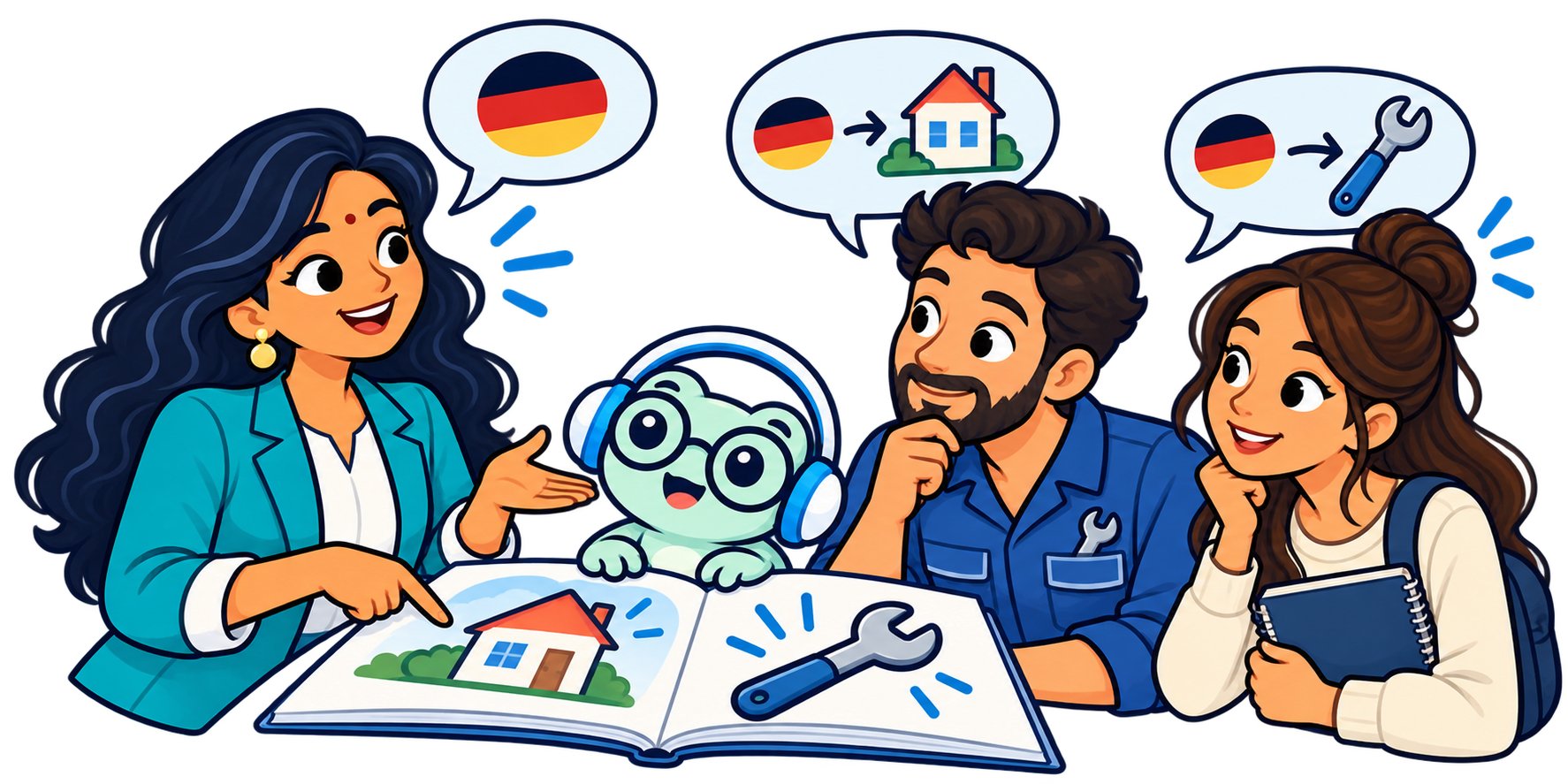
A student can be ready to learn German without being confident in English. Familiar-language explanations help them understand the meaning, ask questions and practise using German.
Understand ideas through familiar explanations.
Connect meaning with words, listening and speaking.
Use German in vocational and daily-life situations.
Begin with students’ native languages, current German level and vocational goals.
We try to arrange teachers who can explain German directly in the group’s native language.
Use demonstrations, familiar situations and guided conversations, with space to ask questions.
Knowing the words is one part of feeling at home. Students also practise the courtesy, habits and conversations that help them settle into a new workplace and community.

Practise polite greetings, punctuality, respectful feedback and asking for clarification.
Discuss professional expectations, personal boundaries and everyday social situations.
Rehearse appointments, transport, shopping and asking for help in German.
Share student numbers, native languages, vocational fields and the intended timeline.
Confirm teacher availability, starting levels, class times and practical learning priorities.
Combine live German classes with useful role vocabulary, etiquette and regular progress discussions.
Start with their native languages and vocational goals. We’ll discuss suitable teaching support and a practical programme for your batch.
Share your goals and availability with us. We’ll help you plan a programme that fits.
Discuss Your Students’ Programme →